What Are Full-Brick, Half-Brick, Quarter-Brick & Eighth-Brick Power Modules? | KRECO
What Are Full-Brick, Half-Brick, Quarter-Brick and Eighth-Brick Power Modules?
A "brick" is not a nickname for a bulky adapter.
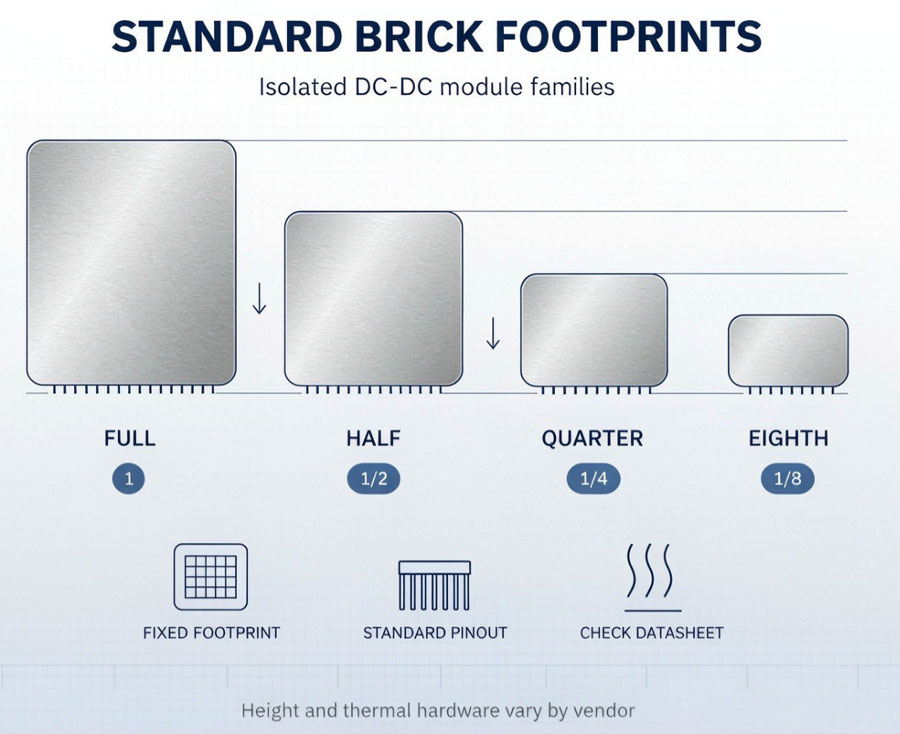
It is a family of standardised, isolated DC-DC converter footprints defined by the Distributed-power Open Standards Alliance (DOSA), letting one vendor's module drop into another's board layout.
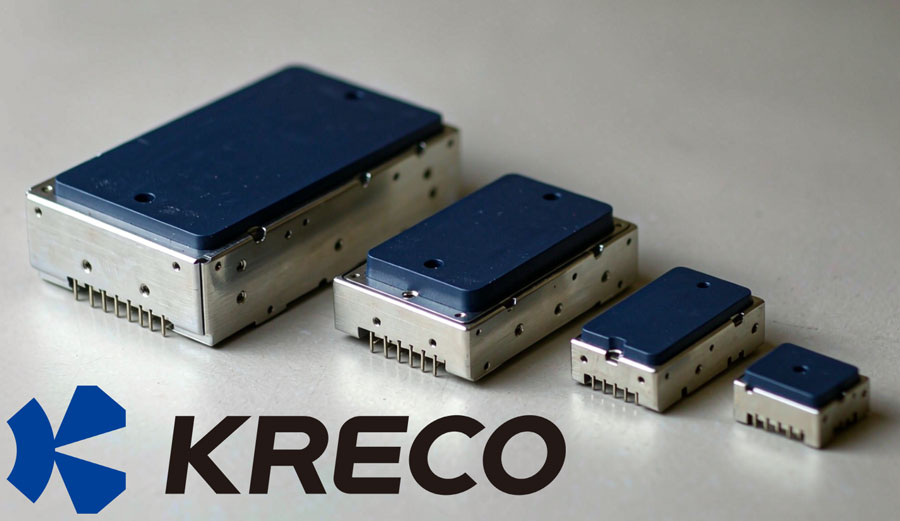
The names describe relative area:
full brick ≈116.8 × 61.0 × 12.7 mm;
half 1/2 ≈61.0 × 57.9 × 12.7 mm;
quarter 1/4 ≈57.9 × 36.8 × 8.1 mm;
eighth 8/1 ≈57.9 × 22.9 × 10.4 mm,
with 1/16 and 1/32 bricks extending the family.
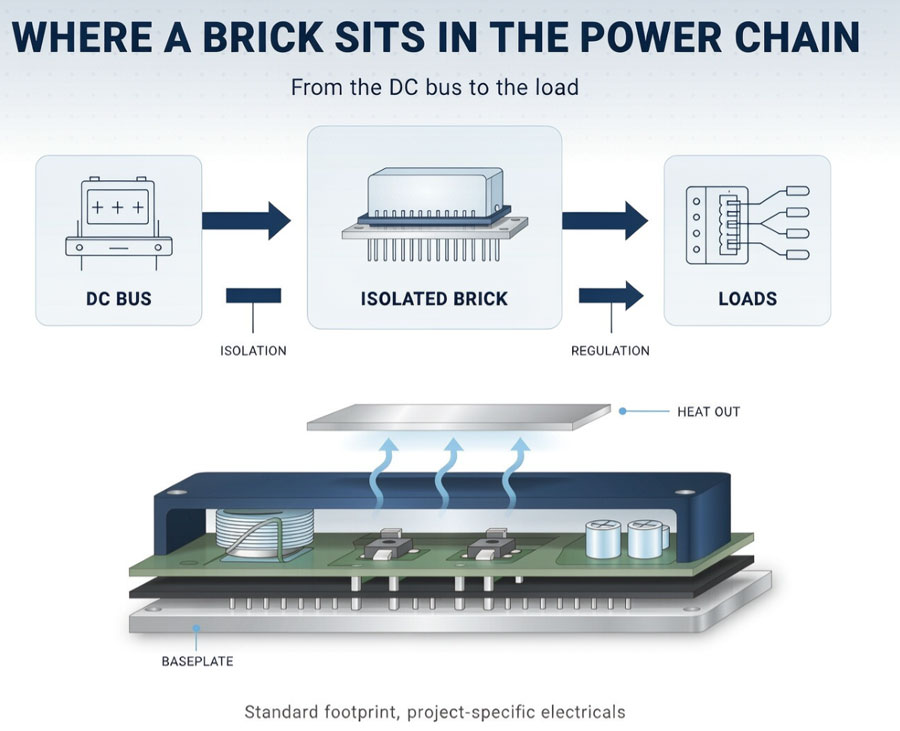
Inputs are typically 24 V, 48 V or 270 V DC buses;
outputs feed 12 V, 5 V, 3.3 V or 28–50 V RF rails.
Only the mechanics are standard — outline, mounting and pinout. Trim range, remote sense, switching frequency, ripple, capacitive-load start-up and thermal rise vary, and bricks normally need external input/output filtering and heatsinking. Second sourcing therefore demands side-by-side validation, not a blind swap.
Power density keeps climbing: the quarter brick is now the mainstream balance of size, output and cooling, while eighth bricks serve dense AI-server intermediate buses.
In an AESA sub-array, a half brick can feed the T/R modules and quarter bricks the digital rails.
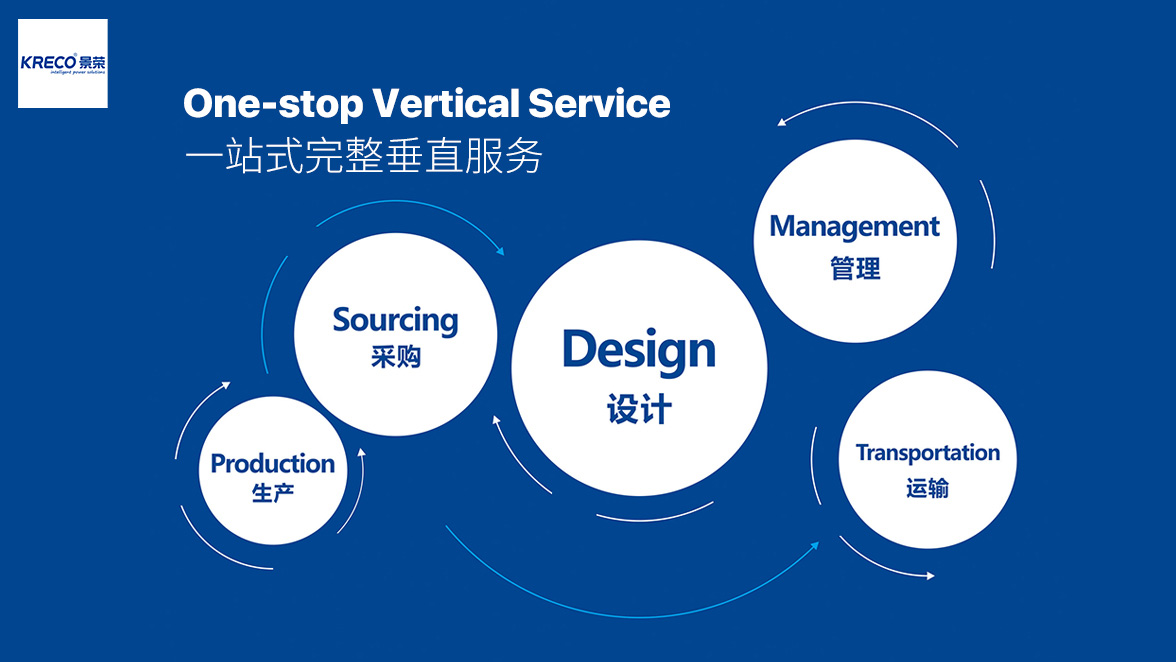
At KRECO Group, the brick is a mechanical starting point.
For medical, industrial and commercial-space projects we freeze the electrical and thermal boundaries to the customer's platform ICD — bring the requirement, and we engineer around it.











 粤ICP备19148190号