

keyword: 12V 1A EU adapter




KRECO | 星网 & 星链(SatNet & Starlink)电源 FAQ 系列 — 第 06 篇
Short answer: Starlink Mini is the low-power, DC-native dish — ~20W idle, 20–40W average (typically ~30W), ~40–50W peak — and accepts native 12–48V DC via barrel jack (plus USB-C PD 60W+). Starlink Standard 4 / 4 X is the residential dish — official 75–100W average — with no native low-voltage DC input; it needs 56–57V DC over proprietary passive PoE, so battery systems require the official DC-DC supply (12–48V in → 56V/3.57A) or a third-party boost converter. On the same 1000Wh battery, Mini runs ~28 hours vs. Standard 4's ~8.5 hours — Mini lasts roughly 3–3.5× longer.
| Parameter | Starlink Mini | Starlink Standard 4 / 4 X |
|---|---|---|
| Idle Power | ≈20W | ≈20W |
| Average Power | 20–40W (typically ≈30W) | 75–100W (official spec) |
| Peak / Startup | ≈40–50W (boot) | Higher boot + snow-melt surge (supply rated 195W) |
| Winter / Snow Melt | ≈40–45W average | ≈75–85W+ average (heaters add 10–20W) |
| Daily Energy (24/7) | ≈0.7 kWh/day | ≈1.8–2.4 kWh/day |
| Annual Cost (24/7 @ $0.16/kWh) | ≈$42/yr | ≈$90–140/yr |
| Weight / Form | Compact, portable, built-in kickstand | Larger phased array (594 × 383 mm), IP67 |
| DC Aspect | Starlink Mini | Starlink Standard 4 / 4 X |
|---|---|---|
| Native DC Input | YES — 12–48V DC barrel jack | NO — no low-voltage DC input |
| Required Dish Voltage | Works directly from 12V / 24V / 48V battery | 56–57V DC via proprietary passive PoE (1236+ / 4578-) |
| USB-C PD | Yes — works with 60W+ USB-C PD power banks / chargers | No |
| 12V / 24V Battery Directly? | Yes — connect 12V or 24V straight to barrel jack | No — needs boost to 56–57V first |
| Official DC-DC Path | Not needed (native DC) | Starlink Standard DC-DC Power Supply: 12–48V DC in → 56V / 3.57A out (~200W), XT60, 12AWG, IP66 |
| Inverter Route | Unnecessary — but works (pure sine wave ≥500W if used) | Pure sine wave inverter ≥500W + original AC PoE brick (least efficient) |
| 48V LiFePO4 Caution | Confirm ≤48V (51.2V LiFePO4 exceeds Mini's 48V ceiling) | Official DC-DC input also capped at 48V — 51.2V banks need wide-input (10–60V) third-party DC-DC |
Key takeaway: Mini is the only current Starlink dish with a true native 12–48V DC input. Standard 4 always needs its voltage stepped up to 56–57V — either by the official DC-DC brick or a compatible boost converter / inverter. This is the single most important distinction for RV, van, marine, and solar designs.
Using Runtime (h) ≈ Capacity (Wh) × 0.85 ÷ Load (W), with Mini at its ~30W typical average and Standard 4 at 100W (conservative high end of the 75–100W range):
| Battery Capacity | Mini @30W | Standard 4 @100W | Mini Advantage |
|---|---|---|---|
| 300Wh | ≈8.5 h | ≈2.6 h | ≈3.3× |
| 500Wh | ≈14.2 h | ≈4.3 h | ≈3.3× |
| 1000Wh | ≈28.3 h | ≈8.5 h | ≈3.3× |
| 1500Wh | ≈42.5 h | ≈12.8 h | ≈3.3× |
| 2000Wh | ≈56.7 h | ≈17.0 h | ≈3.3× |
| 3600Wh | ≈102 h | ≈30.6 h | ≈3.3× |
Practical translation: a 1000Wh power station powers a Mini for over a full day (≈28h) — or two to three workdays if you only use it during working hours — but only about 8.5 hours for a Standard 4. Conversely, that same 1000Wh station running Standard 4 covers roughly one workday. Mini's efficiency is why it is the default recommendation for portable, battery-first builds.
| Item | Starlink Mini | Starlink Standard 4 |
|---|---|---|
| Daily Consumption | ≈0.7 kWh/day | ≈1.8–2.4 kWh/day |
|
Solar Needed (5 sun hrs, ~70% real-world) |
≈200W → budget 250–400W | ≈570W → budget 600–800W (800W+ for weather margin) |
| Recommended Battery | 1–2 kWh | 2–3.6 kWh |
| Typical Sustained Setup | 300–400W solar + 1–2 kWh battery | 600–800W solar + 2–3.6 kWh battery |
Mini needs only about one-third to one-half the solar array and battery bank of a Standard 4 — a decisive advantage for roof-space-limited vans, boats, and small cabins.
| Use Case | Recommended Dish | Why |
|---|---|---|
| RV / van / overlanding / camping | Starlink Mini | Native 12–48V DC, USB-C PD, ~30W draw, tiny solar/battery needs |
| Marine / boat | Starlink Mini (or Standard 4 with official DC-DC) | Mini avoids inverters entirely; Standard 4 works with 12–48V DC-DC + pure sine wave guidance |
| Portable / emergency go-kit | Starlink Mini | Runs from a 60W+ USB-C power bank — no generator needed |
| Fixed home backup (UPS / power station) | Standard 4 / 4 X | AC-powered with UPS-backed supply; higher throughput & larger coverage (Router Mini ≈120 m², Router 3 ≈297 m²) |
| Full-time off-grid homestead (grid replacement) | Standard 4 / 4 X + solar | Higher performance; budget 600–800W+ solar and 2–3.6 kWh battery |
| Whole-home / business primary internet | Standard 4 X (Router 3, tri-band) | Best coverage & LAN ports; pair with proper UPS |
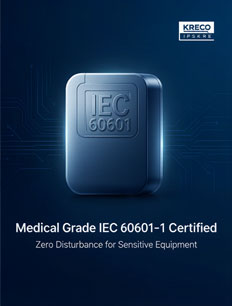
KRECO Group — an IEC 60601 medical & industrial power manufacturer since 2008 (Equity Code 891359, Medical Reg. 20200118#, FIME Silver Sponsor) — is developing Starlink-compatible OEM/ODM power solutions under the iPSKRE Power Ecosystem, covering both dish classes:
Inquire Now: sales@kreco.com.cn | iPSKRE Power Ecosystem | Starlink-compatible DC-DC & passive PoE OEM/ODM supply (Standard 4 / 4 X / Mini) under development.
Power figures based on Starlink official Specifications (Standard 4 / 4 X: 75–100W average) and 2026 measured consumption references (Mini: ≈20W idle, 20–40W average, ≈40–50W peak; winter 40–45W). Runtime uses a 0.85 efficiency factor. Hardware revisions, regional variants and plan types may vary — always verify your exact kit before procurement.
 粤ICP备19148190号