
What you're actually paying for in a medical-grade power adapter
It's easy to look at a bill of materials and ask why a medical-grade adapter carries such a premium. But the difference isn't in the plastic shell or the label. It's buried deep in the engineering decisions that make the product safe for use in operating rooms, ICUs, and home care devices.

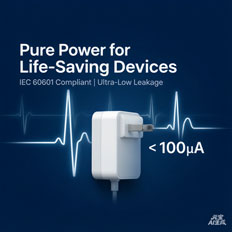
Leakage current is the tiny amount of electrical current that flows through the insulation and into the ground wire — or worse, into the patient. In a hospital environment, patients are often connected directly to monitoring equipment via electrodes or sensors. Even a small current passing through the heart can trigger ventricular fibrillation.
That's a 25x difference. To achieve sub-10µA leakage, the power supply must incorporate:
Each of these adds material cost, manufacturing complexity, and quality control steps. A standard adapter simply doesn't need them.
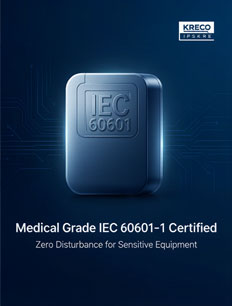
Medical safety standards (IEC 60601-1) mandate 2 × MOPP (Means Of Patient Protection). This means two independent insulation systems between the mains input and the patient-connected output. If one layer fails — due to a manufacturing defect, aging, or an overvoltage event — the second layer remains intact and continues to protect the patient.
Achieving 2×MOPP requires physically separating the windings in the transformer — often using triple-insulated wire, adding bobbins with extended barriers, and increasing the overall size of the magnetic core. The result is a heavier, larger, and more expensive transformer compared to a single-insulation design used in commercial adapters.
In addition, the printed circuit board must maintain specific clearance and creepage distances — typically 8 mm or more across the isolation barrier. That forces designers to allocate more board space and use specialized slotting techniques, further driving up cost.
The materials used in a medical power adapter are held to a higher standard than those in consumer electronics. They must resist fire, withstand sterilization chemicals, and not release toxic substances if overheated.
Beyond these two examples, medical adapters also use:
Each of these material upgrades adds incremental cost — but together they ensure the adapter can survive years of daily use in demanding healthcare settings without degrading performance or compromising patient safety.
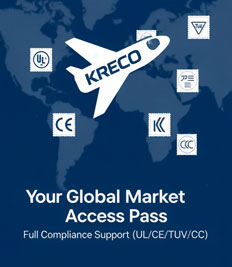
Getting a power adapter certified to IEC 60601-1 is a fundamentally different process from certifying to IEC 62368-1 (the standard for IT and audio/video equipment). The testing scope is broader, the pass/fail criteria are stricter, and the test house fees reflect that.
IEC 60601-1 vs IEC 62368-1 — the testing gap is real.
Test houses charge more because the tests are more extensive.
Key differences in testing include:
Furthermore, medical certifications typically require ongoing surveillance audits and retesting whenever a component changes. This adds recurring compliance costs that don't exist for non-medical products.
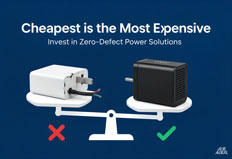
Every dollar spent on a medical-grade adapter is an investment in reliability, safety, and regulatory peace of mind.
 粤ICP备19148190号