
keyword: 12V 1A EU adapter




KRECO | Starlink & SatNet Power Supply FAQ Series — Article 23
Short answer: Community and public-safety sites must be designed as a complete SatNet Power Supply system, not a dish on a battery. Split the design into a connectivity layer (terminal + router/firewall + switch + APs) and the whole-site load (charging, lighting, HVAC, clinical equipment). Use Enterprise for fixed shelters/schools (75–100W, 50 m cable, PSU 100–240V ~6.3A IP66 with a dedicated earth terminal, no router — you add your own firewall); Flat High Performance / Performance Gen 2 for deployable response (110–150W, 200W max, 25 m, in-motion with a Mobile Priority/Maritime plan). Size with battery Wh = Load (W) × hours ÷ 0.85 and solar ≈ daily Wh ÷ 3.5: a 215W shelter connectivity layer needs ≈6.1 kWh for 24 h and ≈18.2 kWh for 72 h; a 350W school layer needs ≈3.3 kWh for an 8-hour day; a 360W redundant field-hospital layer needs ≈30.5 kWh for 72 h. Build redundancy: mains → ATS → generator (N+1) + UPS/DC-UPS bridge + solar/MPPT/LiFePO4, dual terminals with failover, and remember a Starlink reboot costs 15–20 minutes — a UPS eliminates that gap. Critical rule: clinical devices must use IEC 60601-1 medical power, never the IEC 62368-1 SatNet path; follow NFPA 110 / NFPA 99 and your AHJ.
| Site | Consequence of Outage | Recommended Terminal | Autonomy Target | Power Architecture |
|---|---|---|---|---|
|
Community emergency shelter (50–100 people) |
High — family reunion, aid coordination, information | Enterprise (+ Standard 4 X if you want Router 3 Wi-Fi ≈297 m²) | 72 h (community standard) | Mains + UPS/DC-UPS + solar/MPPT/LiFePO4 + generator N+1 |
| School / campus continuity | Medium-High — learning continuity, safeguarding, parent comms | Enterprise (own firewall / content filtering / SD-WAN) | 8 h (school day), 24 h preferred | Per-closet UPS + central LiFePO4 + rooftop solar + generator |
| Field hospital / medical point | Life-safety — telemedicine, records, coordination | Enterprise (fixed) or Flat High Performance (deployable) | 72 h+ with N+1 | ATS + generator + UPS bridge + DC-UPS; clinical loads on IEC 60601 power, separate |
| EOC / incident command | Critical — multi-agency coordination | Dual terminals (Enterprise + FHP or secondary WAN) | 72 h–7 days | Fully redundant: two power paths, two terminals, failover routing |
| Outreach / rapid-response team | Medium — small, fast, mobile | Starlink Mini (≈30W, native 12–48V DC / USB-C PD 60W) | 8–24 h | Portable station + foldable solar + 12V vehicle harness |
The single biggest planning error is sizing a battery for the dish alone. At a community site the terminal is usually the smallest part of the load — Wi-Fi, switching, device charging and lighting dominate.
| Load Item | Shelter | School | Field Hospital |
|---|---|---|---|
| Starlink terminal | Enterprise 100W | Enterprise 100W | Enterprise 100W + redundant 100W (or FHP 150W) |
| Router / firewall / SD-WAN | 30W | 40W | 40W |
| Core switch + Wi-Fi APs | 85W (switch 25W + 4 APs) | 210W (core 60W + 10 APs) | 120W (switch + 6 APs) |
| Connectivity layer subtotal | ≈215W | ≈350W | ≈360W |
| Device charging (phones/tablets) | +150W avg (40 devices) | +600W (carts, intermittent) | +100W (staff devices) |
| LED lighting (if backed up) | +150W | +200W (critical areas) | Separate essential circuit |
| Clinical equipment | — | — | SEPARATE — IEC 60601 power (see §7) |
Design rule: size and protect the connectivity layer as one protected subsystem (that is what this guide covers), and design whole-site loads (charging, lighting, HVAC, catering, clinical) as a separate electrical system with its own distribution, protection and code compliance.
Battery Wh = Load (W) × hours ÷ 0.85 — the 0.85 covers conversion losses. Solar ≈ daily Wh ÷ 3.5 (at 5 peak sun hours and ~70% real-world efficiency; derate heavily for winter, smoke or storm cloud). Add 15–20% battery capacity for cold.
| Tier | Purpose | Shelter (215W) | School (350W) | Field Hospital (360W) |
|---|---|---|---|---|
|
Tier 0 — Bridge 10–30 min |
Covers the 15–20 min Starlink reboot and generator start | A UPS or DC-UPS on battery-backed outlets — mandatory at every critical site | ||
| Tier 1 — 8 h | A working day / overnight | ≈2.0 kWh | ≈3.3 kWh | ≈3.4 kWh |
| Tier 2 — 24 h | Full day of autonomy | ≈6.1 kWh | ≈9.9 kWh | ≈10.2 kWh |
|
Tier 3 — 72 h (community standard) |
Sustained community support | ≈18.2 kWh | ≈29.6 kWh | ≈30.5 kWh |
| Tier 4 — 7 days | Sustained operation with fuel logistics | ≈42 kWh + generator/solar | ≈69 kWh + generator/solar | ≈71 kWh + generator (N+1) |
| Solar to sustain 24 h | Daily Wh ÷ 3.5 | ≈1.5 kW | ≈2.4 kW | ≈2.5–4 kW |
| Generator (whole site) | Pure sine wave; N+1; outdoor only | 5–8 kW inverter | 8–15 kW | 10–20 kW+ with ATS |
Battery chemistry: use LiFePO4 (2000–5000+ cycles, deep-discharge tolerant). Size the nameplate capacity assuming ~80–90% usable depth of discharge, then add the 15–20% cold margin. The 72-hour figure is a widely used community preparedness target — confirm the required autonomy with your authority having jurisdiction (AHJ).
| Risk | Mitigation |
|---|---|
| Brief mains flicker | UPS/DC-UPS on battery-backed outlets — Starlink takes 15–20 min to reboot and re-acquire, so even a 30-second flicker costs ~20 minutes offline. This is the highest-value item at any critical site |
| Terminal hardware failure | Dual terminals + a spare unit held in store; combine with a secondary WAN (fibre/LTE/5G) where available, with failover routing |
| Power-path single point | Separate protected paths for the terminal and the router/firewall/APs; keep Router 3 (Standard 4 X) on backup power too — it is the dish's PoE source |
| Extended outage | Generator N+1 with ATS; fuel rotation and a documented refuelling plan; solar to reduce generator runtime |
| Light-load auto-shutoff | Disable ECO / auto-shutoff on any station feeding a light load (critical for Mini-based outreach kits) |
| Winter / snow | Keep Snow Melt Auto; size for peak; add 15–20% battery capacity |
| Silent failure | Monthly 10-minute run test on every power path, quarterly full-duration test, and a written log |
| Load | Correct Power Standard | Why |
|---|---|---|
|
Clinical / life-support equipment (monitors, ventilators, infusion pumps, imaging, diagnostics) |
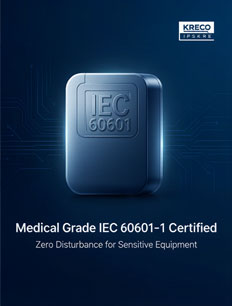
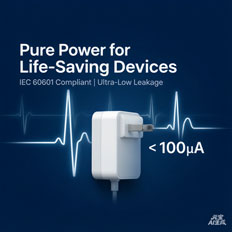
IEC 60601-1 (4th Edition, 2×MOPP, ≤100 µA leakage) medical power supplies | Patient-connected devices require means of patient protection and leakage limits that IT/AV power does not provide |
| Starlink terminal & network | IEC/EN 62368-1 SatNet Power Supply modules | Correct standard for IT/AV and communications equipment — never substitute for clinical power |
| Essential electrical system | NFPA 110 (emergency/standby power), NFPA 99 (health care facilities) where applicable, plus local electrical code and AHJ approval | Governs transfer times, separation of essential branches, testing and documentation |
| Generator safety | Outdoor placement, carbon-monoxide detection, correct bonding/grounding, fuel storage rules | CO poisoning is a leading cause of death after disasters — never run a generator indoors or near intakes/windows |
Procurement implication: a field hospital needs two power scopes — a medical-grade scope (IEC 60601 supplies, UPS and energy storage for clinical loads) and a SatNet scope (IEC 62368-1 DC-DC, PoE and DC-UPS for connectivity). KRECO is unusual in manufacturing both (see §10).
| Category | Line Items |
|---|---|
| Terminals | Enterprise (fixed sites) or Flat High Performance (deployable/mobile) — plus one spare; keep all original parts for warranty and restore-to-factory diagnostics |
| SatNet power | Wide-input DC-DC boost (10–60V → 56–57V, ≥200W; 340W class for FHP) or APSU; proprietary-pinout passive PoE injector (1236+/4578-) as spare; correct-gauge fused DC harnesses (XT60 / Anderson) |
| Backup power | UPS/DC-UPS with auto-restart (battery-backed outlets); LiFePO4 bank sized by W × h ÷ 0.85 + 15–20% cold margin; MPPT controller; solar array; generator with ATS (N+1); fuel plan |
| Protection | Outdoor Ethernet/PoE SPD, AC surge protection, bonding/grounding kit, air terminal, fuses/breakers per local code, IP66 enclosures with IP68 glands, drip loops, dielectric grease |
| Network | Firewall/router/SD-WAN (Enterprise has none), managed PoE switch, ceiling APs, Cat6 cabling (≤100 m), lockable rack, labels, spare patch leads |
| Medical (field hospital only) | IEC 60601-1 medical power supplies (e.g. KRECO KRE048MPS–KRE480MPS), medical UPS/energy storage, essential-electrical-system distribution per NFPA 99/110 and AHJ |
| Documentation & drills | Single-line diagram, load list, autonomy calculation, printed runbook (no app/internet needed), monthly 10-minute and quarterly full test log, fuel-rotation record, staff training |
KRECO Group — an IEC 60601 medical & industrial power manufacturer since 2008 (Equity Code 891359, Medical Reg. 20200118#, FIME Silver Sponsor) — is one of the few manufacturers able to supply both halves of a public-safety site: the IEC 60601 medical power for clinical equipment and the IEC/EN 62368-1 SatNet Power Supply for connectivity.
Inquire Now: sales@kreco.com.cn | iPSKRE Power Ecosystem | Starlink-compatible SatNet Power Supply OEM/ODM (DC-DC, passive PoE, DC-UPS, IP66 enclosures) + IEC 60601 medical power for field hospitals — under development / in production respectively.
Based on Starlink official Specifications & Help Center (Enterprise: 75–100W average, 110° FOV, IP67 Type 4 dish, snow melt up to 40 mm/h, wind operational 96 kph+, Enterprise Cable 50 m / 164 ft, larger power supply 100–240V ~6.3A 50–60 Hz IP66 −30 °C to 50 °C ≈1.5 kg wall mount with dedicated earth terminal, NO router included; Flat High Performance / Performance Gen 2: 110–150W average, 200W max, 140° FOV, dish IP56 / PSU IP66, snow melt up to 75 mm/h, wind survivable 280 kph+, Wedge Mount Kit, 25 m cable, in-motion capable with Mobile Priority / Maritime plans; Standard 4 / 4 X: V4 dish IP67, 75–100W average, proprietary passive PoE 56–57V on pins 1236+ / 4578-, UTP-253L 195W, Standard 4 X ~150W brick to Router 3 with Router 3 always powered, dish cables up to 45 m; Mini: 12–48V DC native + USB-C PD 60W, ~30W; DC-DC 12–48V in → 56V/3.57A ≈200W XT60 IP66; APSU UTP-252C AC 100–240V + DC 12–57V → 57V IP68 with DC >20V recommended; pure sine wave inverter ≥500W guidance; Starlink reboot/re-acquire ≈15–20 min; default CGNAT addressing) plus KRECO medical series data (IEC 60601-1 4th Edition, 2×MOPP, ≤100 µA leakage, Medical Reg. No. 20200118#, KRE006MPS–KRE480MPS) and 2026 emergency-power practice. Sizing uses battery Wh = W × h ÷ 0.85 and solar ≈ daily Wh ÷ 3.5 (5 peak sun hours, ~70% efficiency) — worked loads are illustrative templates; measure your own site. Autonomy targets (including the widely used 72-hour figure) must be confirmed against your AHJ, and emergency power systems must comply with local electrical code, NFPA 110 and, for healthcare occupancies, NFPA 99. KRECO is not affiliated with or endorsed by Starlink/SpaceX; Starlink-compatible SatNet Power Supply modules are under development. SatNet modules are IEC/EN 62368-1 industrial products and are NOT medical devices — clinical and life-support equipment must be powered from IEC 60601-1 medical supplies. Always use licensed installers for mains, generator, grounding and lightning-protection work, keep generators outdoors, test every power path regularly, and keep original Starlink parts for warranty.
Next Article ▲:WAITING FOR UPDATING...
Previous Article ▼:Starlink Power for Remote Work & Digital Nomads: Building a Portable 12V Kit | SatNet Power Supply | KRECO
 粤ICP备19148190号